toolivo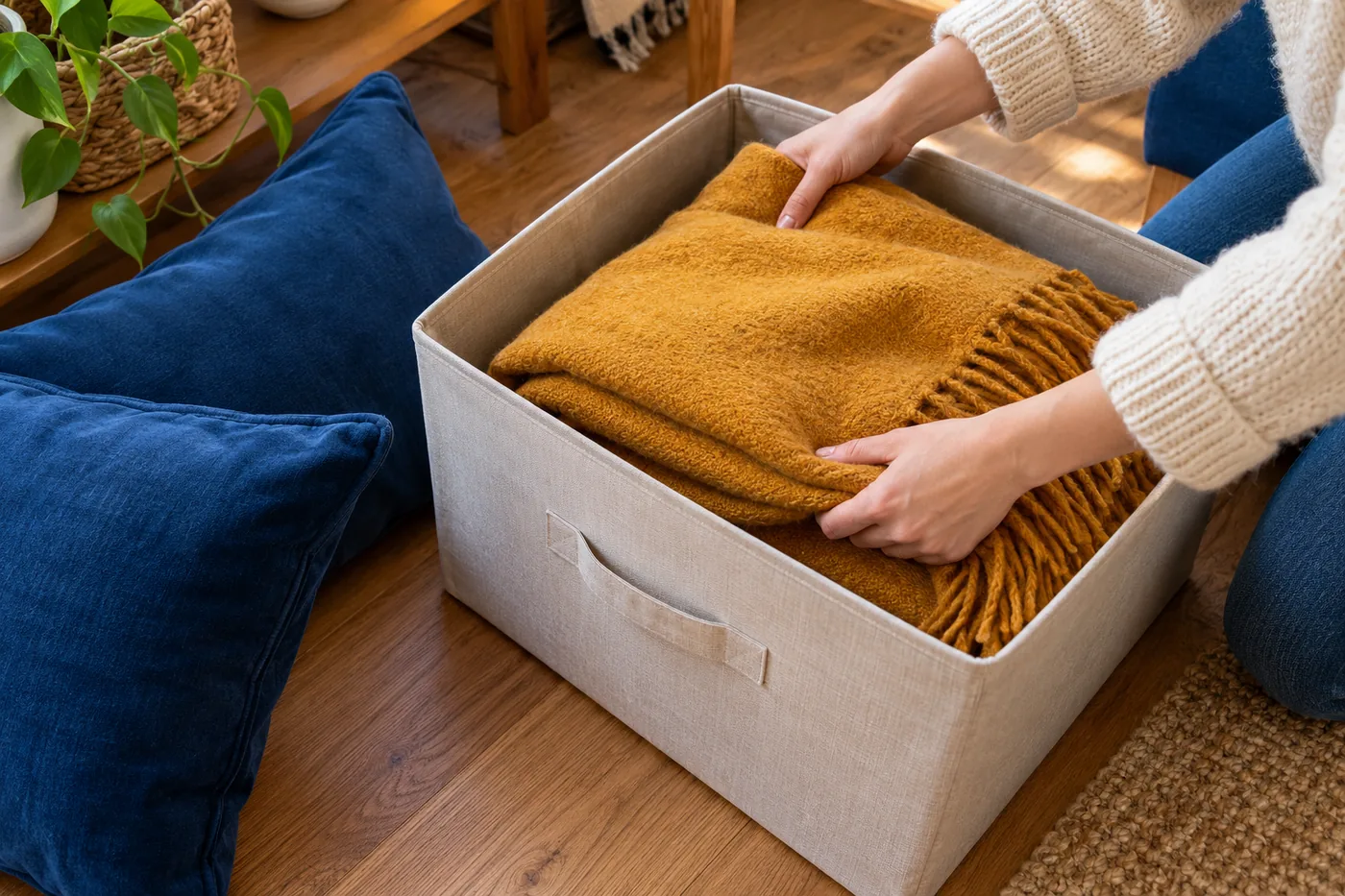
A seasonal swap is a change in what your home keeps closest to hand. Clothes, bedding, throws, and decorative pieces move between active use and less accessible storage as the household's needs change. The useful result is a simpler daily selection, not a home transformed all at once. You can rotate one category successfully without changing every room.
Treat the swap as a sequence of small exchanges. Identify what you are reaching for, bring that category forward, and decide what can move back. A calendar can remind you to check, but actual use should guide the timing. Weather, travel, work patterns, and household preferences do not always change neatly on the same date. Allow a transition period instead of assuming that every outgoing item will become unnecessary overnight.
Define What Really Needs to Rotate
Start with the categories that create friction in daily storage. Perhaps heavier clothes crowd out the lighter pieces you currently wear, or several throws fill a basket when only one is in use. Those are practical candidates for rotation. A category that fits comfortably and remains easy to choose may not need a seasonal system at all.
Separate functional changes from decorative preferences. Changing bedding or clothing access can support daily routines. Rotating a vase, table runner, or ornament can be enjoyable, but it is optional. Combining both into one enormous task can make a necessary clothing swap depend on finding time to redecorate the home.
Write a short scope for this round. For example: exchange outer layers, review spare bedding, and bring one box of seasonal decor forward. Leave categories that do not need attention alone. The narrower scope makes it easier to finish and to see whether the arrangement improved the storage that prompted the swap.
Choose a Transition Window
Instead of setting a single all-or-nothing day, allow a short period when outgoing and incoming categories overlap. Keep a small selection of versatile items available while the new season settles into your actual routine. That overlap is particularly helpful for clothing and bedding, where preferences can vary from day to day.
The transition group should have a defined location and size. Otherwise it can become a second complete wardrobe or a pile of textiles that never returns to storage. A shelf section or a few designated hanging spaces may be enough. Decide which items genuinely bridge the change and which are staying out because you have not yet made a decision.
An illustrative household might bring lighter bedding into use while keeping one warmer option accessible. The rest of the bulky collection can move to occasional storage after preparation according to its care instructions. The choice is based on use and available space, not on a rule that a particular month requires a particular textile.
Read Last Season's Storage Before Emptying It
Before opening every container, inspect the labels and any inventory notes. Look for categories you expect to use immediately and boxes that can wait. If the labels are vague, open one container at a time and improve the description while the contents are visible. This turns retrieval into a chance to make the next swap easier.
Notice anything packed last time that you did not remember owning. That does not automatically mean it should go, but it deserves a fresh decision before returning to the active area. Ask where and how you intend to use it now. A specific place or occasion is more informative than a general feeling that it might be useful eventually.
Set up three temporary groups: incoming for current use, outgoing for storage, and decisions to complete. Keep the third group modest. Do not mix newly retrieved items with the pieces leaving the room, especially when they have similar colors or functions. Distinct staging areas reduce the chance of repacking the wrong category.
Rotate Clothing by Use and Available Space
Bring forward clothing that supports the coming weeks of your real life. Work requirements, school routines, time outdoors, and planned occasions are useful guides. A seasonal wardrobe does not need to include every possible outfit category if some can remain in less convenient storage until needed.
Try uncertain pieces before assigning them prime space. Check whether they suit your current preferences and intended activities, and follow their care labels when preparation is needed. The swap is a good moment to identify repairs or alterations, but those items should go into a clear action group rather than back into the wardrobe as though they were ready to wear.
Return incoming clothing to broad, useful categories. Leave enough room that a garment can be removed and returned without disrupting several others. If the active wardrobe is immediately crowded, reduce the selection or reconsider how much genuinely needs rotation. Moving the same excess between two locations does not resolve an overfull daily storage area.
Prepare Outgoing Items Before Packing
Review each outgoing category before it enters storage. Confirm that you still want it, that its purpose is clear, and that it is ready to store according to its care instructions. Make any required preparation a separate visible task. Avoid closing a container around a mixture of ready items and pieces that still need attention.
Items requiring a repair or other decision should remain identifiable. Attach a simple note describing the issue and place them in a bounded action area with a realistic review time. A container marked only “next season” can conceal those unfinished tasks until the day you need the items again.
Do not use the swap to create a hidden backlog. If there is not time to prepare everything, store only the ready portion and leave the remainder in one labeled temporary group. That is easier to complete than reopening several containers later to locate the pieces that should not have been packed with the rest.
Exchange Household Textiles One Room at a Time
For bedding, towels, throws, and table linens, begin with the pieces currently occupying active space. Identify what is changing and what remains useful throughout the year. You may only need to exchange a cover or a few throws; the entire linen collection does not need to move because one room's use changes.
Complete the exchange in one room before spreading textiles into another. Put the incoming pieces into their intended use or storage position, then prepare the outgoing group for its next location. This makes the room usable again quickly and provides a clear stopping point if the rest of the swap must wait.
Label textiles by purpose and size when those details affect retrieval. “Living room throws” or “main bed cover” is easier to interpret than “winter fabric.” If several pieces are interchangeable, group them together rather than creating artificial room assignments. The label should reflect how you will choose the item next time.
Give Decor a Fixed Storage Allowance
Seasonal decoration can expand quietly because individual pieces are small. Choose a realistic storage allowance before deciding what returns to the active rooms. The allowance might be one shelf or a small number of labeled containers. It should fit the space you are willing to devote to this category throughout the rest of the year.
Group decorations by the way you set them out. A small collection used together on a table may be easier to retrieve as one group than separated by material or color. Keep versatile pieces distinct from occasion-specific ones if that helps you find them. Photograph an arrangement only if you want a reminder; you are free to use the pieces differently next time.
When something no longer suits the home, decide its future during the swap. Returning it to storage without an intended use postpones the same decision for another cycle. Keep meaningful pieces deliberately, and pass on items according to appropriate local options when you no longer want them. The goal is a collection you enjoy opening, not a record of every past decorating choice.
Choose Containers After You Know the Categories
Measure the available storage and consider how you will retrieve each container. A large box may hold more but be inconvenient to handle in its assigned location. Several smaller containers may offer better category access while using more space. Choose based on the actual shelf, cupboard, or other suitable storage area and the items' needs.
Transparent containers improve visibility but still benefit from labels. Opaque containers can make a space look calmer but require more explicit contents information. Soft bags can fit flexible textiles, while structured containers can make some shelves easier to use. Follow appropriate care guidance for the items rather than assuming one container style suits every material.
Avoid buying a full matching set before testing one container. Pack a representative category, place it in its intended spot, and retrieve it again. If the process requires moving several unrelated objects, change the location or division. Storage works over time when access is reasonable, not merely when every item can be made to fit once.
Write an Inventory That Earns Its Keep
An inventory can be as short as a label plus a note on your phone. Record the category, location, and any missing or incomplete element. For a household with only two seasonal boxes, labels may be enough. For items spread across several storage areas, a small central list can prevent repeated searching.
Use plain descriptions. “Bedroom cupboard, upper shelf: guest winter bedding” gives both the destination and contents. Avoid codes that require a separate key unless the collection is large enough to justify them. If several people need access, keep the inventory somewhere they already look for household information.
End the swap by updating the notes while the arrangement is fresh. Remove entries for items passed on and add the locations of moved categories. A stale inventory can be less useful than no inventory because it encourages confidence in the wrong location. Keep the format simple enough that corrections take moments rather than a separate administrative session.
Finish With a Room Check and a Storage Check
Before calling the swap complete, look separately at the active room and the storage area. In the room, try the everyday actions the change was meant to improve. Choose a garment, retrieve a throw, or return a folded cover. If the active category is still crowded or awkward to reach, the swap has moved objects without fully resolving the original difficulty.
At the storage location, confirm that each container describes what is actually inside and that no unfinished preparation is hidden among ready items. Check that the transition group remains accessible and has not been packed accidentally. Record anything stored in a different location from last season. These few closing actions protect the effort already spent choosing and preparing the contents.
A worked example might involve a small wardrobe, one spare shelf, and two textile bags. The household brings current clothes into the wardrobe and packs the outgoing ready items into one bag. A second bag holds occasional bedding. A few transition layers remain in a labeled wardrobe section. Decorations are left alone because they were outside the scope of this particular swap.
After a week, the household notices that one supposedly outgoing layer is still being retrieved regularly. The useful response is to return that item to the active wardrobe and remove something less useful if space is tight. There is no need to defend the original division merely because the labels have been written. Seasonal organization is a working arrangement, and ordinary use can reveal a better boundary.
Schedule a brief follow-up only if there are unresolved items or a transition group to review. Otherwise, let the system run. A finished swap should free attention for other things, with labels and a small inventory ready to support the next change when the household actually needs it.
Frequently Asked Questions
What if my home has almost no extra storage?
Rotate fewer categories and keep the active collection small enough to coexist. Versatile clothing and textiles may remain accessible throughout the year, while only the bulkiest or most occasion-specific items move. Consider whether each seasonal category deserves the space it occupies between uses. A rotation system cannot create storage capacity on its own; sometimes the useful change is reducing how much you retain for occasional use.
Should I rotate everything on the same weekend?
Only if that suits your time and the scale of the collection. Clothing, bedding, and decorative items can follow different schedules. A short sequence of completed exchanges is often easier to manage than opening every storage area at once. Write down the categories still waiting so that stopping after one room does not feel like losing track of the overall task.
How do I handle unpredictable weather?
Keep a small transition selection in easy reach and delay packing the few items you still use. Make the selection explicit so it does not expand into the entire outgoing category. Review it after a period of ordinary use. The timing should follow what your household reaches for, with the calendar serving as a reminder to check rather than an instruction to put everything away.
What should I do when I discover something missing?
Record it as a specific gap before shopping. Check whether another item already serves the same purpose and whether the need is immediate or occasional. If replacement makes sense, note the dimensions, use, and storage location it must fit. This prevents a seasonal review from turning into an unfocused purchasing session prompted by the feeling that the collection ought to be complete.
How can the next swap take less work?
Finish this one with clear labels, ready-to-use contents, and a brief note about what you changed. Record a useful discovery such as “only two throws used regularly” or “keep one lighter layer accessible.” Those observations help the next decision without requiring a detailed journal. The greatest time saving usually comes from fewer uncertain possessions and clearer categories, rather than faster packing or more elaborate containers.
About this guide
Published by Toolivo Editorial. Our guides focus on practical household organization and adaptable room layouts.
Have a correction or a question? Contact Toolivo or read our editorial policy.