toolivo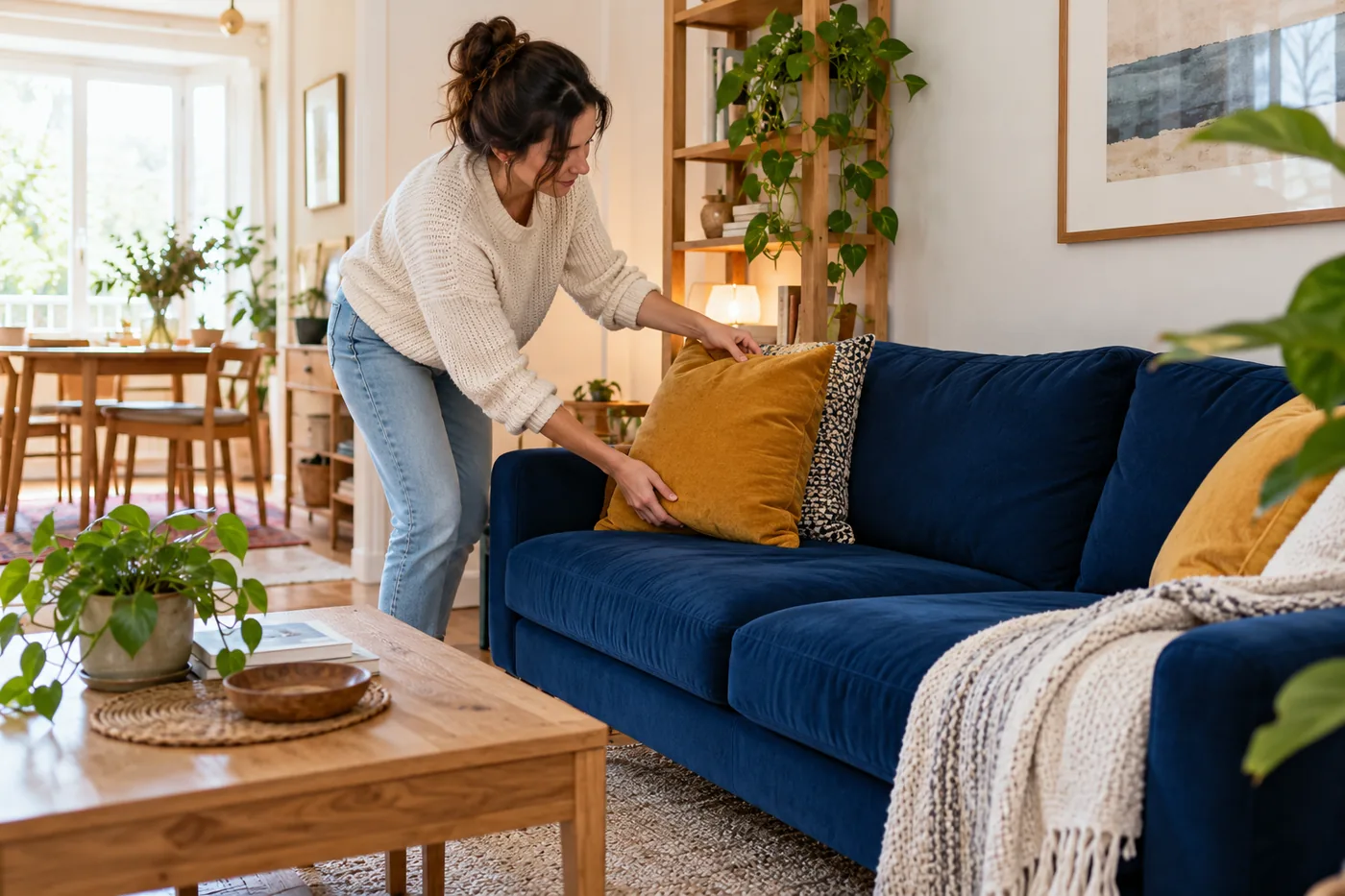
A rented room can feel more personal without a major purchase or a permanent alteration. Often the most useful changes come from deciding what the room is for, moving the objects that interfere with that purpose, and giving the pieces you already own a clearer relationship. A refresh is an opportunity to make the room easier to use as well as more pleasing to look at.
This approach begins with observation and reversible experiments. It does not assume that every rental permits the same changes or that a product described as removable is suitable for every surface. Check your agreement and any relevant instructions before attaching, painting, or altering anything. There is still a great deal you can do through arrangement alone.
Choose one specific improvement
Describe what you want the room to do better. Perhaps the entrance feels blocked, the seating does not support conversation, or the desk dominates the view from the door. A concrete problem gives the refresh a direction. "Make it nicer" is understandable, but it can lead to buying decorative objects before the practical issue is identified.
Choose one visual goal alongside the functional one. You might want a calmer view, a stronger color connection, or a more inviting reading corner. Keep the goal modest enough to test. A room does not need to imitate a completely different interior to feel more intentional and comfortable.
Take a few photographs of the current arrangement for your own reference. They can help you notice crowded surfaces or disconnected groups of objects. Use them alongside your experience of the room, not instead of it. A photograph may make an empty corner look ideal even when that corner is essential for a daily activity.
Make an inventory without emptying everything
List the main furniture, textiles, lighting, and personal objects already available. Include pieces in other rooms that could reasonably move without causing a new problem. A useful lamp, side table, or textile may already exist in the home but be doing little in its current position.
Distinguish ownership from obligation. Something can belong to you without needing to be displayed in this particular room. Store or relocate objects deliberately when they do not support the current arrangement, while respecting any items that belong to the landlord or another household member. Never dispose of supplied furniture simply because it does not suit the new look.
Avoid beginning by placing every possession on the floor. A whole-room emptying exercise can create a large unfinished task. Work in manageable areas and keep essential routes clear. The refresh should remain reversible and should not make the room unusable if you need to stop before the entire project is complete.
Edit one view before changing the whole room
Stand at the entrance and identify the first few things you notice. Are they the objects you want to see, or are they temporary piles and awkward furniture backs? Improve that view by relocating one source of visual noise or adjusting one furniture relationship. This gives the room a clearer introduction without requiring a complete redesign.
Next, look from the position where you spend the most time. The view from a sofa or desk may matter more than the view from the doorway. A beautiful entrance photograph does little for someone who spends the evening facing an overloaded shelf. Choose the perspectives that belong to actual use.
Do not interpret editing as removing all personality. A meaningful picture or collection can remain a focal point. The useful distinction is between a deliberate display and an accumulation whose members have never been considered together. Give important objects room to be seen rather than surrounding them with everything else you own.
Change furniture relationships first
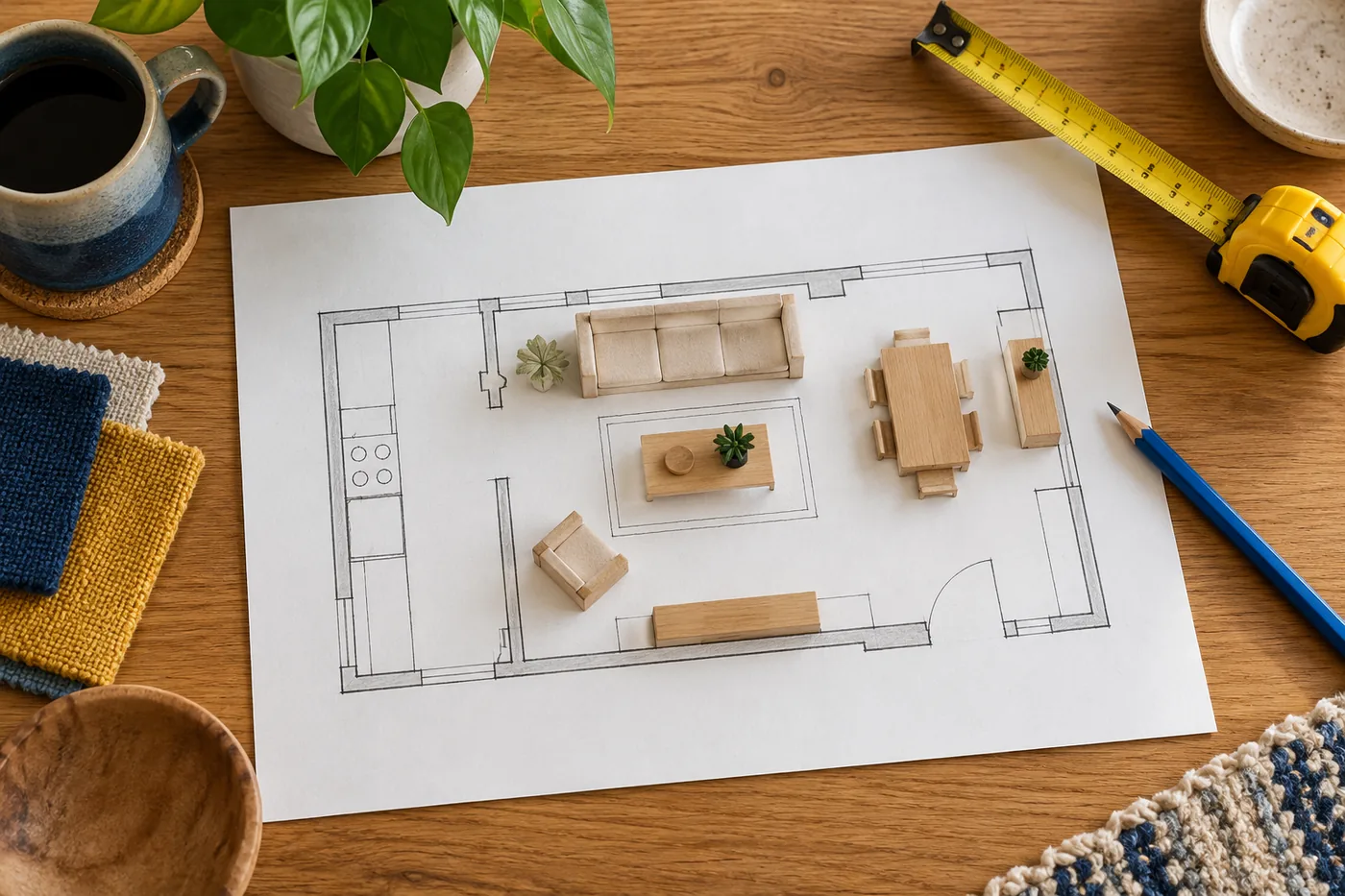
Before buying anything, test a different arrangement using measured footprints. A chair turned toward the main seating can improve conversation. A side table moved to the place where a drink is actually set down can make the room feel more complete. A cabinet shifted away from a door may improve both access and the view into the space.
Plan moves carefully and get appropriate help for heavy or awkward items. Do not drag furniture in ways that may damage the floor or the item. Check supplied furniture restrictions where relevant. A refresh should not create a repair problem through an unnecessarily rushed experiment.
Keep access, stability, and manufacturer instructions central to the arrangement. Required anchoring, ventilation clearances, and door access still apply. A room can be visually different without placing furniture in a position it was not designed to occupy. If an item cannot safely work in a proposed location, choose another approach.
Use existing color more deliberately
Look for colors already repeated in the room: a book cover, cushion, artwork, or piece of clothing stored visibly. Choose one or two that you enjoy and make their relationship more apparent. You do not need every object to match. A small number of repeated accents can create coherence while allowing the room to remain varied.
Move textiles between suitable locations to test the effect. A throw on a chair may make more sense than the same throw folded out of sight. Cushion covers already owned may work better as a smaller group. Evaluate the combination in the room's actual light rather than relying entirely on a photograph taken at a different time.
Avoid replacing useful objects solely because they fall outside a strict palette. The palette is a guide for future choices, not a rule that requires discarding functional belongings. A rented home often contains a mixture of supplied and personal furniture. Coherence can come from arrangement and repetition without making every finish identical.
Give textiles a practical role
Textiles can connect colors, soften an arrangement visually, and make seating feel more inviting. Start by checking what is already available and suitable for the intended use. A decorative throw should not interfere with how a chair is used, and a loose floor textile should not create an awkward edge on a walking route.
Follow the care instructions for each item rather than assuming that all fabrics can be treated the same way. If curtains are supplied with the rental, check what changes are permitted and how the original arrangement must be preserved. Do not treat replacing a fitting as equivalent to simply moving a cushion.
Use fewer layers when too many make the room difficult to maintain. A sofa covered with cushions that must be removed before anyone sits down asks for repeated work. Keep the pieces that add comfort or a meaningful visual connection, and give the rest another role or a suitable storage location.
Improve lighting through placement
Observe where existing lamps are used and where light is missing for ordinary tasks. A lamp placed for symmetry may be less useful than one beside the reading seat. Reposition portable lighting within its intended use, keeping cords clear of routes and following the product's instructions.
Notice the difference between daytime and evening. A room refreshed only in bright daylight may feel quite different after dark. Test the arrangement at the time it is most often occupied. You may find that a change in lamp position makes the room feel more deliberate without needing an additional fixture.
Do not improvise permanent wiring, overload connections, or hide electrical components in unsuitable ways. If the room needs an electrical alteration, ask the landlord and a qualified professional as appropriate. A decorative goal does not remove the technical requirements of the equipment involved.
Build displays from meaningful groups
Choose a few objects that belong together through purpose, memory, material, or color. Arrange them where they can be appreciated without obstructing a working surface. A small grouping on a shelf may be more effective than individual ornaments spread across every available table.
Leave room around the group. Empty space helps the objects read as a deliberate arrangement and keeps the surface usable. Avoid stacking valuable or fragile items in unstable ways just to vary their height. If a display needs frequent rebuilding after ordinary use, it may belong in a different location.
For pictures, consider safe freestanding display options designed for that purpose if wall changes are restricted. Follow the item's stability requirements and keep it away from places where it can easily be knocked. Any wall attachment should suit the surface, load, and rental conditions; the word removable is not a guarantee of damage-free use.
Contain the objects that disrupt the room
Look at the categories that repeatedly interrupt the arrangement: chargers, paperwork, bags, remote controls, or hobby supplies. Give each one a practical destination close to where it is used. A visually polished room will quickly become frustrating if everyday objects have no acceptable place within it.
Use existing containers before buying a coordinated set. A plain box inside a cupboard may solve the problem better than a decorative basket on the floor. Check access and capacity. A container that is difficult to open or already full does not make returning objects easier, however well it matches the room.
Separate active materials from stored supplies. Keep the current project convenient and move the reserve collection elsewhere if possible. This helps the room look intentional during ordinary use, rather than only after everything has been hidden for a photograph. A refresh should accommodate life, not require it to pause.
Example: refreshing a room with supplied furniture
Imagine a rented living room with a neutral sofa, a dark cabinet, a small table, and a lamp. The tenant owns several colorful textiles and framed pictures but feels the room lacks coherence. The initial temptation is to buy a new rug and several accessories. Instead, the tenant first identifies a blocked route and a lamp positioned too far from the preferred seat.
The small table moves beside the sofa, the lamp moves within a suitable reach of the reading position, and the cabinet's top is cleared of unrelated paperwork. Two existing textiles repeat a strong blue from a favorite picture. Other decorative pieces move to a different room rather than competing on the same surface.
The supplied furniture remains in use, and no permanent alteration is made. The room feels different because its useful objects are better placed and its personal objects have a clearer relationship. A later purchase, if needed, can now address a specific gap rather than trying to compensate for an unresolved arrangement.
Review before spending
Live with the changed room for several ordinary days. Note what works, what still feels awkward, and what you repeatedly move. A desire to buy something may disappear once a practical problem is solved. If it remains, describe the missing function and the maximum dimensions before shopping.
Set a boundary for the purchase rather than collecting possibilities indefinitely. One well-chosen object that solves a known problem can be more useful than several small accessories bought to make the room feel finished. Keep in mind how the object would work in a future home if moving is likely.
Preserve any original fittings or supplied items that must be restored. Keep relevant information together so a future change does not become confusing. The best rental refresh is one you can enjoy now, maintain easily, and adapt responsibly when circumstances change.
Keep a simple record of reversible choices
Photograph the original arrangement of any supplied fittings or furniture before changing it, and keep small components together if a permitted adjustment requires removing them. A labeled envelope or box can prevent a later search for a screw, bracket, or original cover. This is practical housekeeping, not a reason to avoid making the room your own.
Record which changes felt useful after a week and which were only visually interesting on the first day. You may discover that moving a lamp improved daily reading while a decorative grouping was constantly in the way. Keep the useful change and revise the other. A personal room develops through this kind of observation, with decisions based on how you live rather than on whether every experiment looked perfect immediately.
Questions about reversible room changes
Can a room look coherent with mismatched furniture?
Yes. Repeated colors, balanced placement, and clear functional groups can connect different pieces. Matching every item is not necessary. Focus first on proportion and use, then choose a few visual relationships that tie the room together. A collection that reflects real life can feel intentional without resembling a coordinated furniture set.
Are removable products always safe for rented surfaces?
No universal promise applies to every surface and product. Check the lease, the manufacturer's instructions, the wall finish, and any required permission. Test only as directed and understand the removal process before installation. When uncertainty remains, choose a genuinely freestanding alternative or ask the landlord rather than assuming a marketing description settles the question.
What is the best first change with no budget?
Choose the most frustrating everyday movement and improve it using the furniture already present. Clear a route, move a useful surface closer, or give recurring clutter a sensible destination. Then edit one visible area. This combination can improve both function and appearance without requiring a purchase or a permanent alteration.
About this guide
Published by Toolivo Editorial. Our guides focus on practical household organization and adaptable room layouts.
Have a correction or a question? Contact Toolivo or read our editorial policy.