toolivo
A parcel waits beside the sofa because it needs to go back to a shop. A borrowed book sits on the dining table so you will remember it. A bag of clothes has been ready to donate for several weeks, although nobody has decided where it is going. Each object has a reason for being there. Together, they create a kind of clutter that ordinary storage does not solve.
These things do not need a permanent home inside your home. They need a destination, a little preparation, and a realistic opportunity to leave. An outgoing-items station brings those decisions together. It can be one shelf, a divided basket, or a small section of an existing cupboard. Its usefulness depends less on the container than on the routine attached to it.
This guide shows how to set up that routine without turning an entrance into a parcel depot. It separates returns, donations, and borrowed belongings, explains how to handle unfinished preparation, and includes a worked example for a small household. Start with items you already intend to send out; there is no need to declutter the entire home first.
Recognize what belongs in an outgoing station
An item belongs here when there is a clear reason for it to leave your home. Examples include a purchase you have decided to return, a book you need to give back, or clothing you have chosen to donate. The next step may still need arranging, but the decision about keeping the item has been made.
Things you are unsure about need a different decision. If you place a “maybe” object in the donation bag, someone else may reasonably assume it is ready to go. Keep undecided belongings with their owner until the decision is clear. A shared outgoing area should not become an accidental permission slip to dispose of another person's things.
Also separate outgoing items from everyday carry. Your usual keys, wallet, shopping bag, and work equipment have a repeating journey. A borrowed bowl or return parcel has a specific journey with an endpoint. Giving the two groups separate spaces makes it easier to notice the one-off task without disturbing your normal departure routine.
Choose a location that does not obstruct daily life
The most obvious place is near the door, but the most useful place may be a nearby cupboard or an existing shelf in the room you cross before leaving. Choose somewhere you can check naturally. A station hidden behind seasonal decorations is unlikely to help, even if everything fits neatly.
Keep the floor route, door swing, and shared circulation space clear. Do not put bags on stairs or stack parcels where people have to step around them. If the entrance is narrow, store the objects elsewhere and place a small reminder with your departure checklist. The reminder can be near the door without the bulky object being there.
Use what you have for the first trial. A shallow box on a shelf may reveal whether the system fits your household before you buy storage. The size should suit the space you can spare, not the largest pile you have ever accumulated. Oversized furniture can turn a temporary flow of objects into a permanent storage project.
Separate by destination, not appearance
A plain cardboard parcel and a bag of unwanted clothes might look like similar clutter, but they need different actions. The parcel may need a particular return process. The clothes need an organization that accepts them. The borrowed book needs its owner. Grouping them only by size makes those differences disappear.
For a small station, use three plain labels: Returns, Donations, and Give Back. These do not require three large containers. Two reusable bags and a narrow shelf space might be enough. If your household rarely has all three categories at once, a single basket with removable labels can do the same job.
Within each group, keep different destinations identifiable. Do not combine two people's belongings in an unmarked bag or pack separate shop returns together by habit. The aim is to reduce the decisions needed at departure, not postpone them until you are standing outside with a mystery bundle.
| Item type | What must be clear | Ready-to-leave check |
|---|---|---|
| Shop return | Which order, return method, and applicable deadline | Required steps and packaging checked |
| Donation | Who accepts the item and how it will reach them | Condition and acceptance requirements checked |
| Borrowed item | Whose it is and the agreed way to return it | All parts together; handover arranged |
Give unfinished preparation a different place
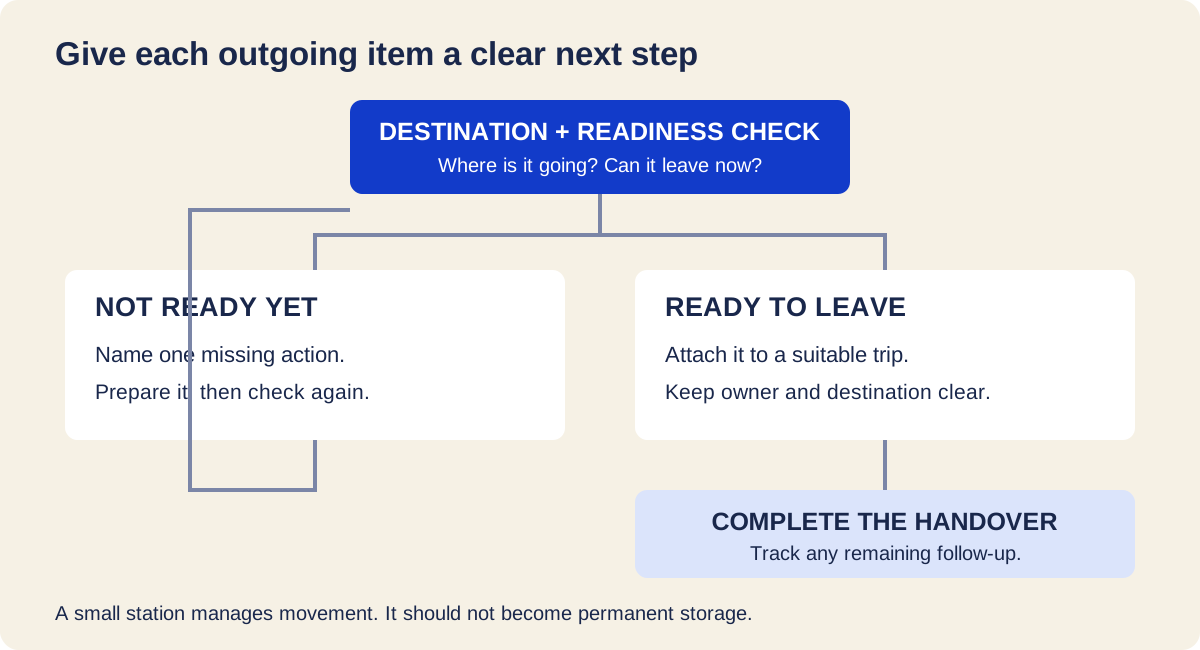
“Leaving the home” and “ready to leave now” are not the same state. A return parcel without the required paperwork, a borrowed game missing a piece, or a donation bag without a destination still needs work. If those items look ready, somebody may take them out and discover the problem too late.
Use a small Needs Preparation section beside the ready area, or attach a clear removable note. Name the missing action rather than writing “sort later.” Examples include “find the purchase record,” “ask where to return this,” or “put the lid with the container.” One specific action is easier to complete than an undefined organizing task.
Keep the distinction simple. You do not need a complicated sequence of baskets for every stage. Most households can work with two states: something remains to be done, or the item can go on the next suitable trip. When preparation is finished, move it visibly into the ready group.
Prepare returns around the actual instructions
Before putting a purchase in the ready area, check the seller's current return instructions for that order. Do not assume that a nearby shop accepts every online return, that a label from another order is interchangeable, or that your household's usual timetable will fit this return. Record the applicable deadline as soon as you have verified it.
Keep the relevant accessories, packaging, and order information together where the instructions require them. If several similar products were ordered, confirm which one is being returned before sealing the parcel. A short note on the outside of your storage bag can identify the order without displaying private account information to every visitor.
Keep any collection, posting, or handover record until the return has been resolved. The physical parcel leaving the room does not necessarily mean the administrative task is finished. Put a follow-up reminder where you normally track pending household tasks rather than keeping an empty box in the station as a memory aid.
This is an organization method, not a statement of return rights or a promise that a return will be accepted. The practical point is to check the terms that apply to your item and follow the required route, rather than treating all returns as identical errands.
Give donations a real destination
A bag marked Donate can remain in the home indefinitely if nobody knows where it is going. Before filling another bag, identify a recipient and check what they currently accept. Think about the actual item, its condition, how it will be transported, and whether an appointment or collection arrangement is needed.
Do not turn a donation bag into a place for everything you no longer want. If an object is unsuitable for the intended recipient, keep it out of that bag and decide on an appropriate alternative. Passing along an unresolved sorting problem does not make the household routine more complete.
For a bulky item, reserve a safe temporary location rather than forcing it into the small station. Put a note at the station showing where it is and what arrangement is pending. The station coordinates departure; it does not have to physically contain every object.
Agree on ownership before anything leaves. In a shared home, use an initial or name on the bag if it is helpful. A bag becoming full is a prompt to review the plan, not a reason to donate somebody else's belongings or rush an uncertain decision.
Return borrowed belongings with their context intact
Borrowed things often become stranded because the object and the person are no longer mentally connected. Attach a removable note with the owner's name and the agreed next step. Put small related parts together so the main item does not leave while its cable, lid, or accessory remains in a drawer.
Arrange a practical handover with the owner. “Next time we meet” works only when another meeting is genuinely planned. If there is no likely opportunity, make a specific arrangement rather than carrying the item from room to room as a reminder.
If something is missing or damaged, speak to the owner before treating the return as routine. Do not conceal the issue in a closed bag. The outgoing station helps you remember a responsibility; it cannot resolve an agreement that still needs a conversation.
Connect ready items to trips you already make
Look at the next few ordinary departures: a walk past the collection point, a shopping trip, or an agreed visit to a friend. Match a ready item to a trip that actually reaches its destination. A parcel beside your keys is only useful if today's route includes somewhere that can accept it.
Record the plan in a place you already check, such as your errand list or household calendar. “Take the blue bag on the Saturday shopping trip” is clearer than “remember donations.” For anything with a deadline, schedule enough time to deal with a failed attempt rather than making the last possible day your default.
Avoid using the car as the permanent next stage of storage. Moving the bag into the boot may clear the entrance without completing the task. When an item travels with you, keep its destination visible in the plan and bring it back to a suitable place if the trip does not happen. Check whether the item is suitable for the storage conditions before leaving it unattended.
A worked example for a small apartment
Imagine a household with a narrow entrance, a low cupboard in the living room, one parcel to return, two sweaters to donate, and a borrowed cookbook. This is an illustrative example. There is no spare floor space by the door, so the outgoing station uses one cupboard shelf instead.
The parcel goes on the left. Its return process has been checked, but a required preparation step remains. A note says what to finish, so it stays in Needs Preparation. The household member responsible adds that action to their evening list rather than assuming somebody else will complete it.
The sweaters go into a reusable tote on the right after the intended donation point's requirements have been checked. The next suitable trip is already planned. A small note identifies the destination and date. There is no need to buy a separate donation hamper for two items.
The cookbook has a removable band with its owner's name. The owner and borrower agree on a handover during a planned visit. It sits flat in the ready area, away from the parcel, so nobody mistakes it for part of the shop return.
At the door, a short departure checklist includes “check outgoing shelf.” The route remains clear because the reminder, rather than the objects, occupies the entrance. After each errand, the person responsible checks whether the physical task and any follow-up are complete. The station works because every object has a plan, not because the containers match.
Use a brief review to prevent a permanent backlog
Choose an existing moment when you already think about the coming days. Before planning errands, look at the station and ask three questions: What is ready? What is waiting for one action? What no longer has a valid plan? Review the item with the nearest verified deadline first.
If the same object keeps appearing, identify the real obstacle. Perhaps the destination is inconvenient, the packaging is missing, or the household has not agreed who will take it. Buying a bigger basket will not solve those problems. Change the plan or complete the missing action.
Set a physical boundary for the station. When it fills, review its contents before expanding into another room. The boundary is a reminder that outgoing storage is temporary. It should lead to a decision about the flow, not an automatic purge of belongings or a deadline invented for somebody else.
Reset a pile that has already been waiting
Start with one manageable group rather than emptying every cupboard. Separate objects with known owners and destinations from those that need a decision. Remove ordinary household belongings that accidentally joined the pile and return them to their normal places.
Then inspect each outgoing item for the missing step. A parcel that has waited for weeks needs its return position checked again; an old donation plan may no longer be practical. Do not preserve an outdated label simply because it is already attached. Replace vague intentions with a current, realistic plan.
Finish by preparing one item completely. A single completed handover or donation trip tells you more about the system than an afternoon spent decorating labels. Keep the arrangement only as elaborate as the household's volume requires, and adjust it when the first real trip reveals a difficulty.
Questions about outgoing household items
What if I have no spare shelf?
Use one portable bag or box stored in an appropriate existing space. Keep a small departure reminder where you will see it. A system can be visible through its reminder without leaving its contents on the floor.
Should everybody share one container?
Only if ownership and destinations remain clear. A shared ready area can work well, but use separate bags or removable labels for things that should not be mixed. Agree that nobody removes another person's item without permission.
How often should the station be emptied?
Let real destinations, appointments, and verified deadlines guide the schedule. Some weeks will have nothing outgoing. Review regularly, but do not create unnecessary journeys just to keep a basket perfectly empty.
What is the simplest place to begin?
Choose one object already waiting to leave. Identify its destination, complete its preparation, and attach it to an appropriate trip or handover. Then give the next object the same treatment. The routine becomes useful one completed journey at a time.
About this guide
Published by Toolivo Editorial. Our guides focus on practical household organization and adaptable room layouts.
Have a correction or a question? Contact Toolivo or read our editorial policy.